If you've been told you need a dental crown, you might have heard two very different timelines from friends or family. One person waited three weeks with a temporary crown before their permanent one was ready. Another walked out of their appointment with a finished crown the same day. So what's the difference?
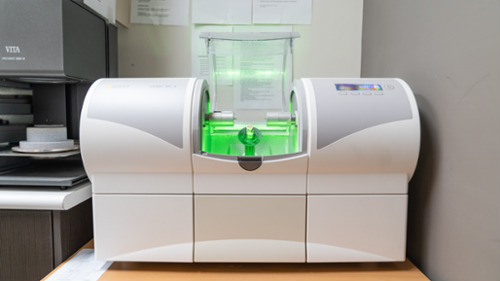
It comes down to how the crown is made. At The Dental Place in Reservoir, we have a CEREC machine on-site, which means we can offer both options depending on what suits your tooth best.
What Makes a Traditional Crown Take Two to Three Weeks
A traditional crown starts the same way most crowns do. Your dentist prepares the tooth, then takes an impression, either a physical mould or a digital scan, of the area.
From there, that impression is sent off to an external dental lab. A technician uses it to hand-craft your crown, choosing the shade, shape and material to match your bite and your smile. This process typically takes one to two weeks.
While you wait, you'll usually be fitted with a temporary crown to protect the tooth. It does the job, but it's not built to last, and it's common for temporaries to feel a bit different or occasionally come loose before the real crown is ready.
Once your permanent crown arrives back from the lab, you'll come in for a second appointment. The temporary comes off, the new crown goes on, and you're done.
Why some dentists still choose this route: traditional crowns can be made from a wider range of materials, including porcelain-fused-to-metal or full metal, which some cases (particularly molars under heavy chewing load) still benefit from.
How CEREC Compresses That Timeline Into One Visit
CEREC same-day crowns follow a different process entirely. Instead of a physical impression, your dentist uses a digital scanner to capture a precise 3D image of your tooth. No trays, no messy putty.
At The Dental Place, our in-house CEREC machine means the scanning, design and milling all happen right here at our Reservoir clinic, without sending anything off-site. We see patients from across the area for this, including Preston, Bundoora and Thomastown.
That scan is used to design your crown on-screen, matched to the shape and shade of your surrounding teeth. Once the design is confirmed, it's sent to an in-office milling machine, which shapes your crown out of a solid block of ceramic while you wait nearby.
From scan to finished crown, the whole process typically takes place in a single appointment. In most cases, there's no temporary crown and no second visit required.
Does Speed Mean a Trade-Off in Quality?
This is the question most patients actually want answered, and it's a fair one.
Same-day crowns are ceramic only, since that's what the milling process works with. Traditional crowns offer a broader range of material choices, which occasionally matters for specific clinical situations. But for the vast majority of patients, ceramic offers a strong, natural-looking result that holds up well to everyday use.
In terms of fit, digital scanning is highly precise, and can actually reduce the small margin of error that sometimes comes with physical impressions.
The honest answer is that neither option is universally "better." The right choice depends on your specific tooth, its location in your mouth, and what your dentist sees during your consultation. That's the whole reason a consult happens before any crown work begins.
Traditional Crown vs CEREC Same-Day Crown
Which One Is Right for You?
There's no one-size-fits-all answer here, and that's a good thing. It means the decision comes down to your tooth, not a blanket rule.
If durability for everyday chewing is the main concern, both options generally hold up well when matched to the right case. Same-day crowns tend to work particularly well for back teeth, where strength and function matter more than fine shade-matching. For front teeth, some patients prefer the extra layering a lab technician can build into a traditional crown, especially when getting an exact colour match against neighbouring teeth is important.
Cost can vary depending on the case and the practice, so it's worth raising during your consultation rather than assuming either option is automatically more expensive.
Ultimately, this is exactly what a consultation is for. Your dentist will look at the tooth in question, talk through what matters most to you (speed, material, aesthetics), and recommend the option that actually fits.
Book a Consultation
Whether you're after the convenience of a same-day crown or a traditional lab-made one, The Dental Place can talk you through the right fit for your tooth. We welcome patients from Reservoir, Preston, Bundoora and Thomastown, and our CEREC machine is on-site and ready whenever it's the right option for you.